- Home
- Crete History
- King Minos
This page may contain affiliate links, see our disclaimer here.
King Minos

By Katia Luz
Minoan King of the Labyrinth?
King Minos Μίνως
The legends of Crete and Greece are incredibly twisted and convoluted. This is the way of history when the stories started as far back as 2000 BC in Crete.
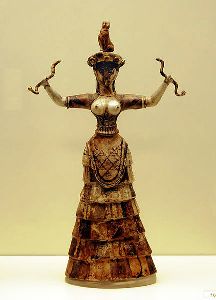
The Minoan civilisation of Crete seemed to be a female or matriarchal society. In Minoan art there are many soft images and frescoes that have been discovered of ceremonial processions, flowers and birds. There are also images of powerful female figures such as the Snake Goddess (left).
The legend of the half-man half-bull who was the Minotaur and the dark mysterious cavern under the palace called the Labyrinth seem to be Greek legends concocted well after the Minoan civilisation. Part of these stories is the legend of a King who kept the Minotaur and who ruled at Knossos.
Greek myths tells us that he was the son of Zeus and Europa, and his brothers Rhadamanthys and Sarpedon ruled at the other Minoan palaces on Crete.
His wife was Pasiphaë, his children were Ariadne, Androgeus, Deucalion, Phaedra, Glaucus, Catreus, Acacallis and Xenodike.
Or his wife was Crete, daughter of Asterion, who raised Minos in Zeus' absence, who was a nymph.
The Minotaur was kept by Minos in the Labyrinth, which was built by the architect Daedalus and his son Icarus.
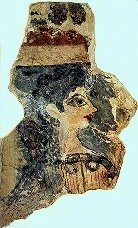
Was Knossos ruled by a King or perhaps a Queen as depicted in this fresco (right), known as the Minoan Lady or perversely, as 'La Parisienne'.
One thing we do know is that the ruins at Knossos were discovered in 1878 by the Cretan Minos Kalokairinos who began excavations. They were later fully excavated by Sir Arthur Evans.
It is Evans who started to use the term 'Minoan' to describe the society whose palace he had uncovered.
So little is known for sure, and what we do know is skewed by years of stories and half-truths.
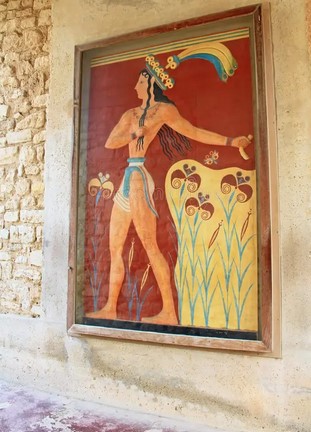
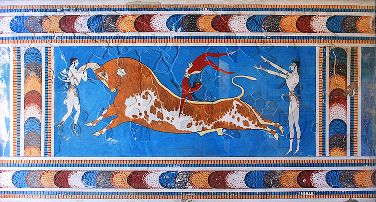
We do know that bulls held a prominent place in ancient Crete, as the bull leaping frescoes show us. One of the most beautiful frescoes uncovered at Knossos shows a young man in what could be a ceremonial stance, he is known as the Prince of the Lilies. This is a controversial reconstruction of many shards.
Knossos Palace
Evans - Amateur Archaeologist
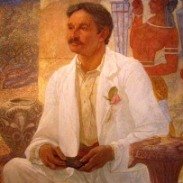
Arthur Evans is credited with discovering, uncovering and rebuilding Knossos Palace and in so doing, unveiling the history of Minoan Crete from 2000 BC, helping to create the story around King Minos.
Visit Knossos
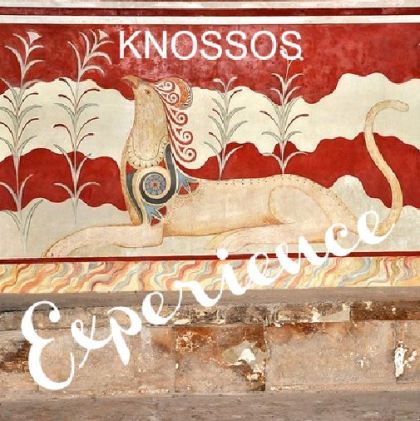
Experience Knossos Palace with pick ups and drop offs from all major centres and hotels, with a fully experienced guide to interpret the palace ruins. Visit the Heraklion museum where all the artifacts are displayed.
We suggest a tour that takes in Knossos Palace and the Heraklion Archaeological Museum, or do it yourself with tips below.
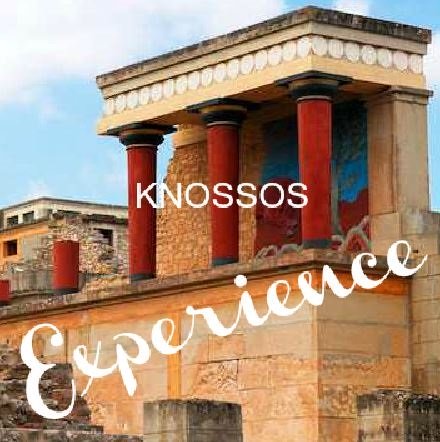
Skip the Line Entry with local interpretive guide - understand the significance of Knossos with an informative, experience local guide to bring the stones alive. 90 minutes.
4.81 / 5 | 960+ Reviews

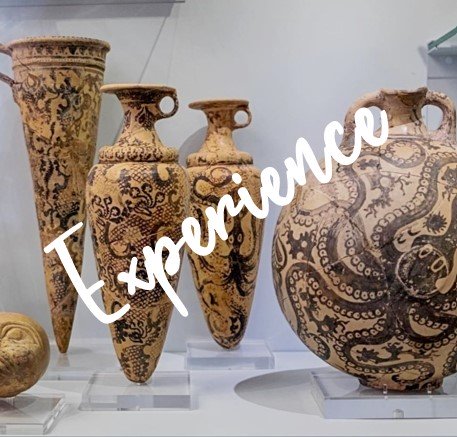
After your visit to Knossos, visit the Heraklion Archaeological Museum to understand more about the history of Crete. See displays of artifacts from all periods of Cretan prehistory and history, covering 5,500 years from the Neolithic period to Roman times.
The museum is located in the centre of Heraklion town at 1 Xanthoudidou & Hatzidaki St
Take a guided walking tour of the museum to have a knowledgeable guide enliven the exhibits for you. 90 minutes.
4.86 / 5 | 20+ Reviews
Ancient History of Crete
Read more about the ancient stories of Crete here on We Love Crete, which will help your understanding of true history, myths, tales and stories and provide lots of information for you to enjoy your visit to Crete, putting the tapestries of cultures into context. Discover you own opinion about King Minos.
See more on the history of Crete here
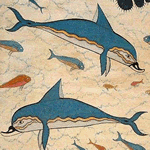
From 7000-3700 BC
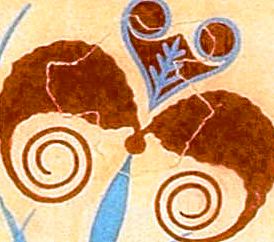
From 3700-600 BC
Video of Knossos
Palace of King Minos
See a video of the Palace of Knossos as it looks today:
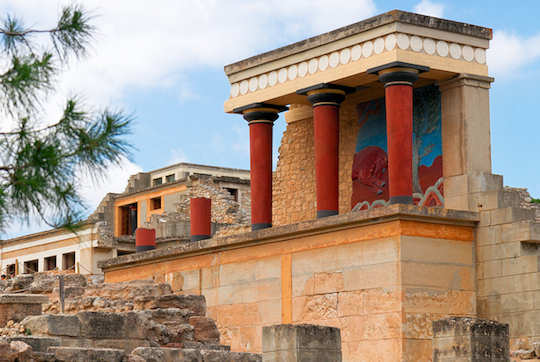 Knossos entry gate with frescoes
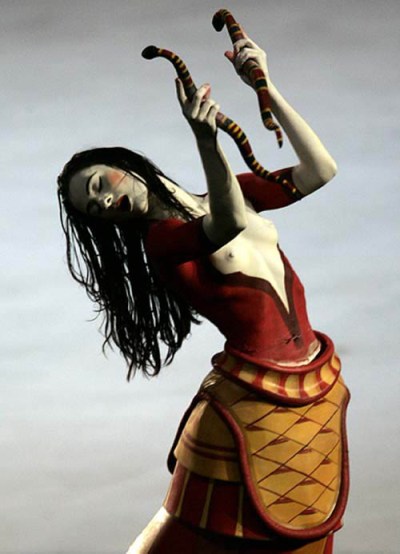 Minoan Snake Goddess, Crete
Accommodation
For history buffs wanting to visit the Minoan Palaces of Crete and the Heraklion Archaeological Museum in Heraklion town, we suggest the following handy accommodation spots.
Stay in Heraklion town - the museum in centrally located and Knossos Palace is 5 km from the centre.
Or stay in Archanes village - this is a characteristic historical village to enjoy in beautiful countryside only 14 km from town and 7 km from Knossos.
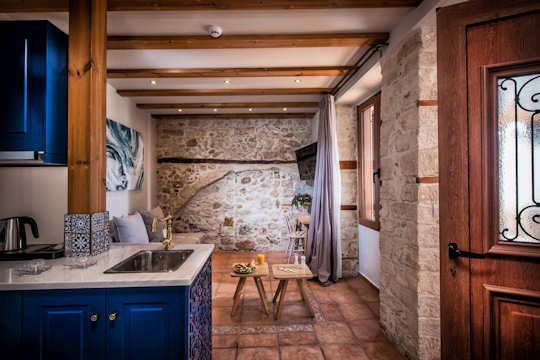
The Veneziano Boutique Hotel
in a beautifully renovated noble home is tucked in a side street yet
very central to the walking and shopping streets of central Heraklion.
Enjoy a little bit of history and a whole lot of style here in this
exquisite hotel.
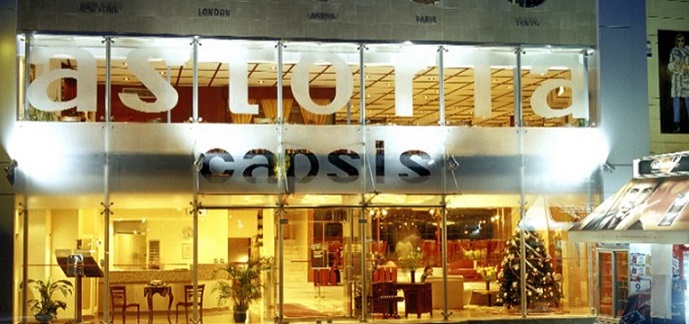
Capsis Astoria Hotel - this is our pick for the luxury hotels in Heraklion, as its location is magnificent. Sitting overlooking the main plateia of Eleftherias Venizelos and just off the pedestrian shopping street of Dedaelou, the Astoria is one of the attractions of central Heraklion.
This hotel is literally a stone's throw from the Archaeological Museum, making it a very practical and graceful choice for travellers seeking luxury.
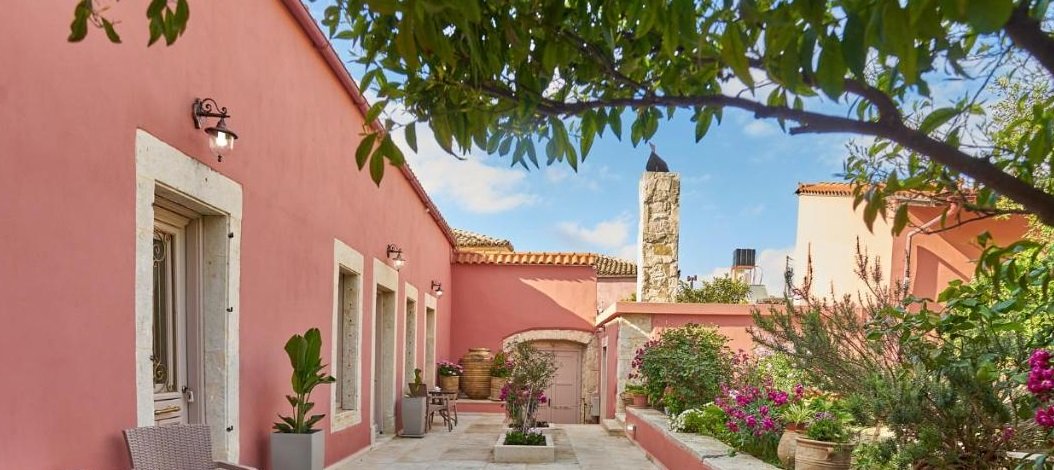
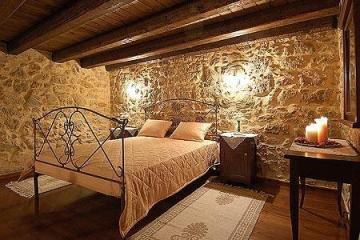
Archontiko Villa - this traditional 19th century mansion in the centre of the village of Archanes, dating from 1893, has been lovingly restored and created into the Arhontiko studios for guests. There are two studios sleeping four visitors each. This building is declared a 'Protected Historical Building'.
With every detail of the restoration attended to, from the stone work to the furniture and decoration. The result is comfortable, authentic and cozy. We often recommend this accommodation for those flying into Heraklion airport, it is close without the need to go into busy downtown Heraklion.
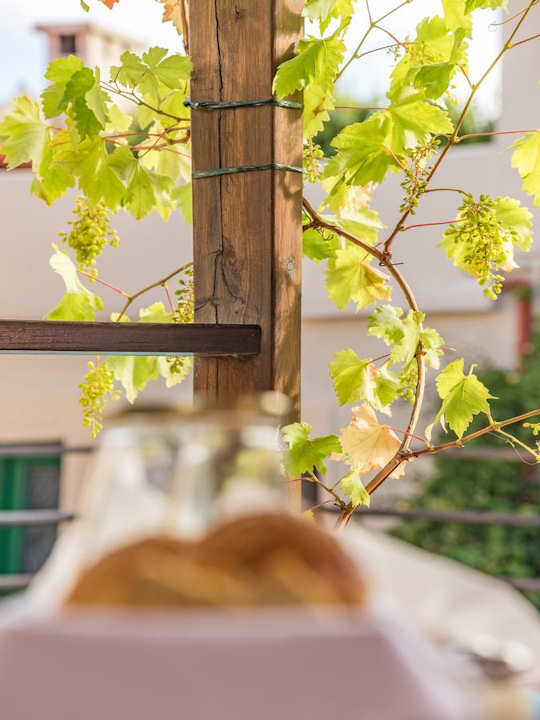
Villa Archanes is a blend of historic and modern with a beautifully restored village home now offering a pool and terraces.
Experience
true country hospitality, wonderful tasty Cretan breakfasts and a
spacious, stylish family mansion house originally dating from 1890.
Traditional
stonework, lovely chunky wooden beams, handcrafted Cretan furnishings
and attention to detail make these rooms a pleasure to stay in.
Choose from a one-bedroom villa which sleeps 2 guests or a two-bedroom villa, with space for 4 guests.
On the Map
Below is the map of Crete with historical sites showing the Palace of Knossos and other Minoan Palaces.
Getting to Crete
Take a 1 hour flight from Athens to Heraklion with Aegean Airlines or Olympic Air, with many flights available per day.
Or take a 9.5 hour overnight ferry from Pireaus port of Athens to Heraklion port.
More on flights and ferries below.


Car hire in Crete is a really good idea as it is a large island 60 km by 260 km. There is so much to explore.
When you book with our car rental partners - Rental Centre Crete - you are supporting a local company with excellent service and easy online booking. We are sure you will be well looked after by the team. Choose from hybrid, electric or regular vehicles.



We trust you have enjoyed these tips from the We Love Crete team. Evíva!
Yiásas!
Anastasi, Apostoli & Katia
are the We Love Crete team
We just love sharing our passion for Crete, Greece and travel
About us Contact Us Kaló taxídi!
About the Team
Yiásas!
Anastasi, Apostoli & Katia
are the
We Love Crete team
We just love sharing our passion for Crete, Greece and travel
About us